Occasions
Take an outfit from daytime to evening
If your day includes evening plans, you may not need a completely different outfit. Choose a base that works for both settings, then decide which small changes will make it feel right later. A different layer, bag or accessory can shift the mood while the main clothes stay the same.
See the outfits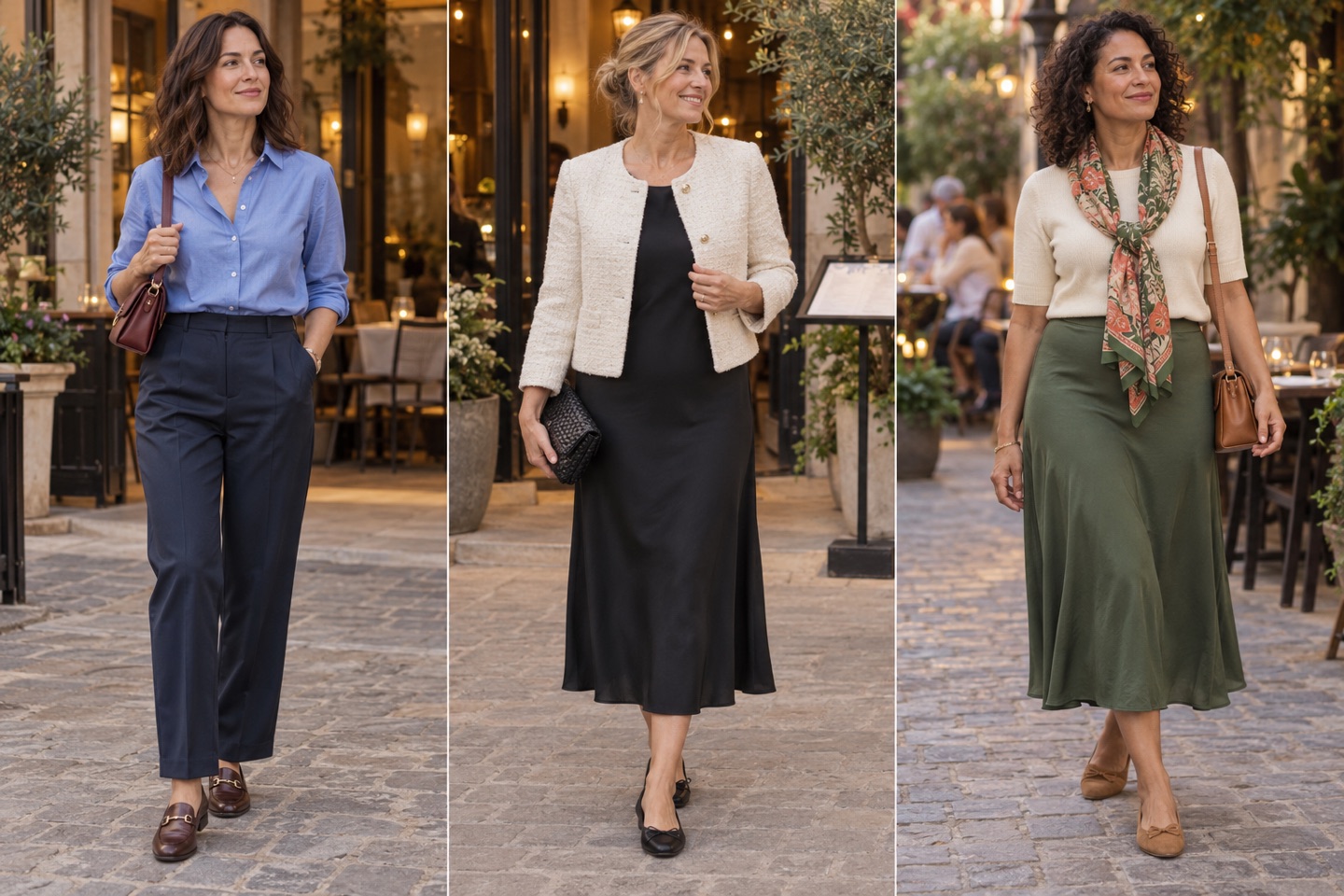
Put it together
Three outfits to try
Use these combinations as a starting point and adapt them to the pieces you own.
Shirt and trousers, two settings
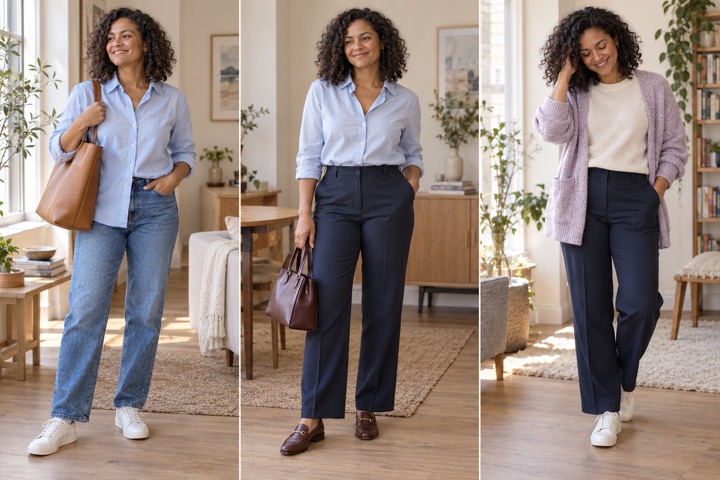
Blue shirt + navy trousers + loafers; swap a tote for a burgundy bag
The clothes stay the same while the smaller coloured bag changes the emphasis.
A dress with a different layer
Black midi dress + comfortable flats; swap a soft cardigan for a short jacket
The jacket gives the familiar base more definition without a shoe change.
A skirt with a brighter finish
Cream top + green skirt + tan flats; add a patterned scarf with green
The scarf repeats a clothing colour and introduces a more visible detail.
Choose the base for both settings
Check where you are going in the evening before planning around your daytime clothes. A casual dinner and a formal event call for different choices. If the evening dress code is stricter, use it to choose the base, then make that outfit more relaxed for the day.
Try a simple dress, a shirt and trousers, or a top and skirt that you already feel comfortable wearing for several hours. Sit down and move around in the full combination. You want a base that will still feel good at the end of the day.
Change one or two visible details
Compare a cardigan with a jacket, a large tote with a smaller bag, or a plain accessory with one you want to feature. Keep the main clothes on while you try the changes. One clear adjustment may be enough; changing every detail can make the transition harder to carry and organise.
You can also use colour to change the emphasis. A darker bag may make a pale outfit feel more defined, while a bright scarf can become its focus. Choose an accessory you already like and find a colour in the clothes that connects with it.
Keep comfortable shoes in the plan
Evening does not automatically mean heels. Loafers, flats, boots or dressier sandals may fit your plans and the dress code. If you change shoes, try both pairs with the clothes beforehand. A long trouser hem may sit differently with a different sole or heel height.
Think about the journey as well as the venue. Walking to transport, standing while waiting and getting home are part of the outfit's job. If a shoe change needs another bag or a place to store your daytime pair, plan that before leaving.
Carry only what you will use
Lay out the change beside your daytime bag and check that it fits. Transfer the essentials if you will use a smaller bag later. Keep a weather-appropriate outer layer in the plan, even if it will come off indoors. A realistic transition is more useful than one that needs a whole second outfit.
Before you head out
- Use the evening setting to check your base outfit.
- Compare one or two changes while keeping the clothes on.
- Check hems with both pairs if you change shoes.
- Pack the change and plan the journey home.
Start with an item you own in Looks Creator Pro. Get style suggestions to help you match clothes, shoes and bags into complete outfits.
See how the app works