Wardrobe
Build a small working wardrobe from what you own
A small working wardrobe is a set of clothes that makes getting dressed easier for your real week. It does not need a fixed number of pieces, a particular colour palette or a shopping list. Start by finding the combinations you already wear comfortably, then see which other pieces can work with them.
See the outfits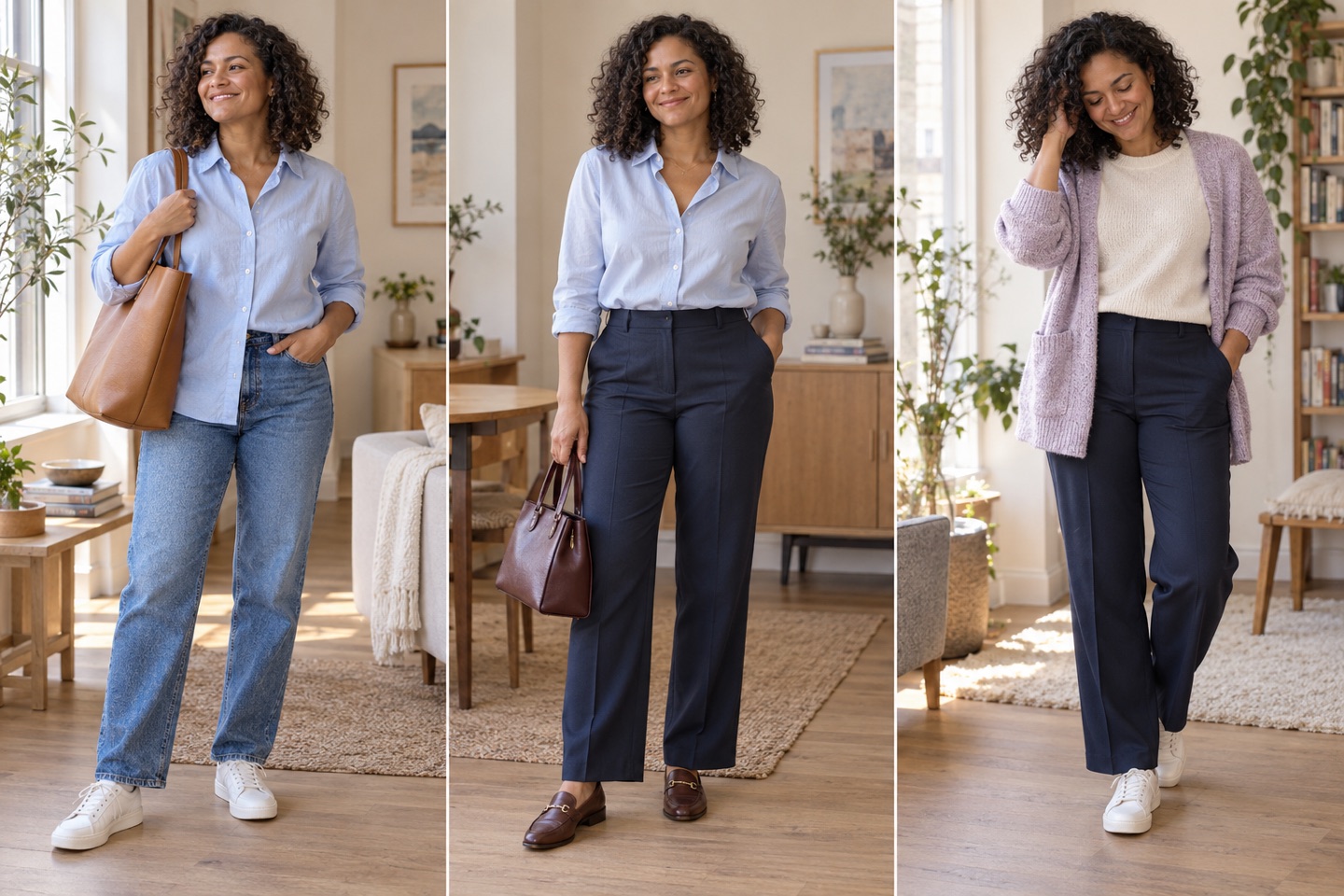
Put it together
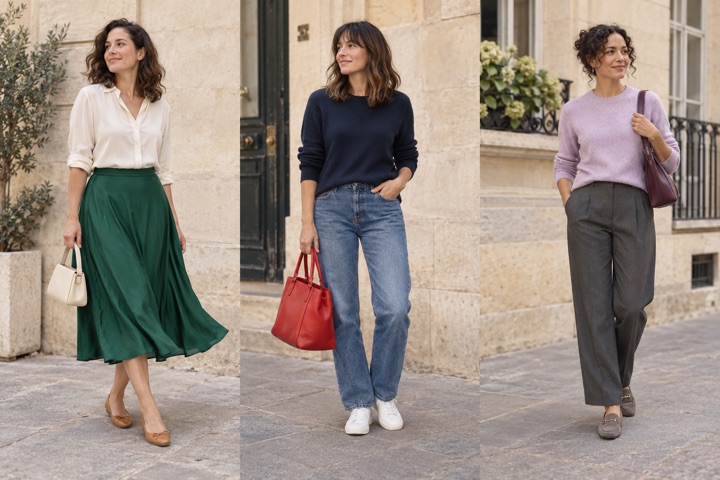
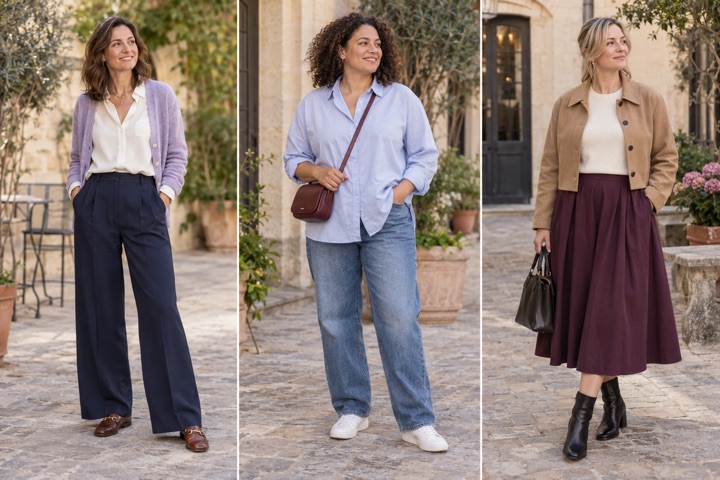
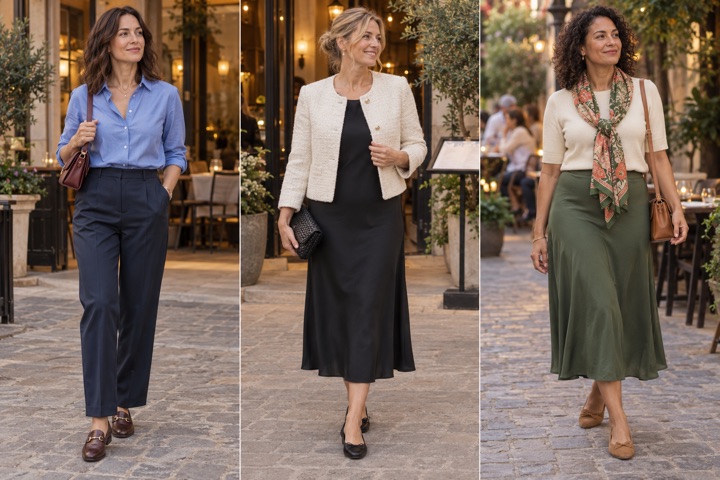
Three outfits to try
Use these combinations as a starting point and adapt them to the pieces you own.
One shirt, an everyday outfit
Blue shirt + jeans + white trainers + tan tote
This familiar base works for relaxed daytime plans.
The same shirt, more structure
Blue shirt + navy trousers + loafers + structured bag
Changing the lower half and accessories gives the shirt a different setting.
The same trousers, a softer look
Navy trousers + cream knit + trainers + roomy cardigan
The trousers stay useful while softer pieces make the outfit more relaxed.
Start with your actual week
Write down the settings you regularly dress for: work, errands, time at home, social plans or outdoor activities. Consider the weather and laundry routine too. The clothes that suit one person's week may not suit yours, even if their wardrobe looks appealing in a photo.
Pull out two or three complete outfits you already enjoy. Include their shoes and the layers you use with them. These familiar combinations are a better starting point than a list of supposedly essential items that you do not reach for.
Look for the pieces that connect outfits
Keep your familiar trousers or skirt and try each top with them. Then keep a favourite top and change the lower half. Notice which pieces appear in several combinations. A blue shirt, a green skirt or a soft cardigan can be a connecting piece if it works for you; it does not have to be a neutral.
Group the successful combinations where you can see them. Similar colours may help the clothes mix, but comfort and usable shapes matter too. A top that matches everything but feels awkward to wear is unlikely to make your mornings easier.
Check full outfits rather than isolated garments
Add shoes, a bag and your usual outer layer to each combination. You may find that a shirt and skirt look good together but do not work with the shoes you need for your day. Try another existing piece before assuming there is a gap to fill.
Take photos of the outfits that work and keep a small collection for busy mornings. Make notes about the setting and weather rather than rating your body in the clothes. A useful outfit photo is a reminder of a combination, not a standard you have to reproduce perfectly.
Identify a gap after trying the combinations
If a piece repeatedly seems to be missing, describe its practical job: a layer with room for your knit, or shoes for a particular dress code. First check whether something you own can do that job. Keep less-used clothes separate for now instead of deciding you must discard them to create a small wardrobe.
Before you head out
- List the settings you actually dress for.
- Start with outfits you already enjoy wearing.
- Test shoes and layers with every combination.
- Record working outfits before identifying anything missing.
Start with an item you own in Looks Creator Pro. Get style suggestions to help you match clothes, shoes and bags into complete outfits.
See how the app works